Maui Whale Watching in March
Whale watching on Maui in March: strong early weeks, mother and calf pairs, the late-month drop, the 27 March count and which tours stop on 31 March.
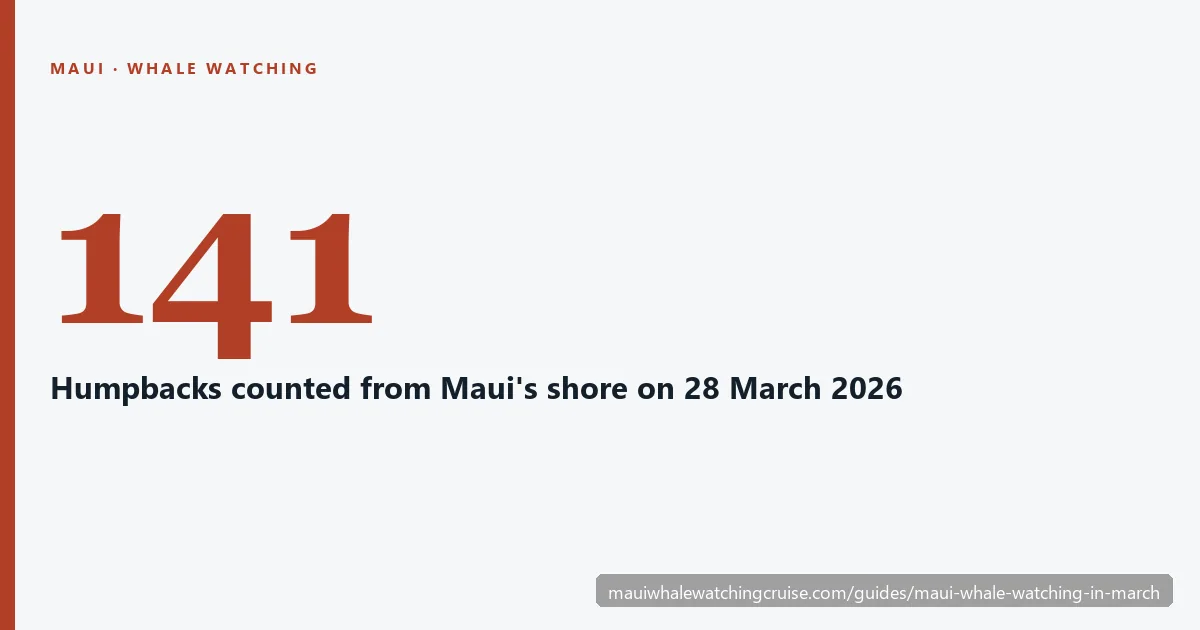
Yes, March is still whale season on Maui, and its first two weeks sit inside the January-to-March peak that NOAA’s humpback sanctuary describes. The last week is a different month: in the 2026 shore count, Maui volunteers logged 141 humpbacks on 28 March, against 694 at the end of January, so book early in the month if your dates allow and treat a late-March trip as a good chance, not a sure thing. Every whale watch in our comparison of Maui whale-watching cruises still sails in March, but three of them stop for the season by 1 April.
Check Availability
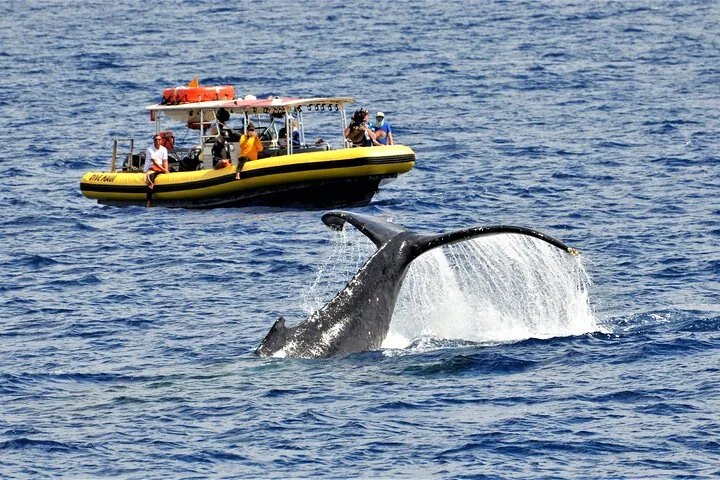
Maui Whale Watching: 2-Hour Small Group Raft Tour from Lahaina
- 4.9/5 (735 reviews)
- 2 hours
- Free cancellation
- Operated by Dive Maui
Includes Marine naturalist guide · Hydrophone and speaker so everyone hears whale song · Reef-safe sunscreen
You'll choose your date and complete the booking on Viator. Free cancellation up to 24 hours before departure.
Same cruise, also on GetYourGuide
From $81 per person · ★ 4.9 from 85 GetYourGuide reviews
Each platform sets its own price and collects its own reviews, so compare both before you book on Viator.
Early March is still peak season
The Sanctuary’s own guidance puts the usual peak in humpback numbers from January through March, and the 2026 statewide count bears out the first half of that: volunteers counted 1,935 whales at the end of February, close to January’s 1,954. Early March trips go out into that same water, with mothers, calves, escorts and singing males still spread through the channels between Maui, Lānaʻi, Molokaʻi and Kahoʻolawe.
The weather is the same mild winter pattern. NOAA’s 1991–2020 normals for Kahului Airport give a March average high of 82.9°F and a low of 65.1°F, with 2.64 in of rain for the month. The sea is at its coolest of the year, around 73 to 74°F between late February and March, which matters only if your trip includes a swim. Days are getting longer: on 15 March the sun rises in Lahaina at about 6:35 a.m. and sets at about 6:36 p.m.
Mother and calf pairs
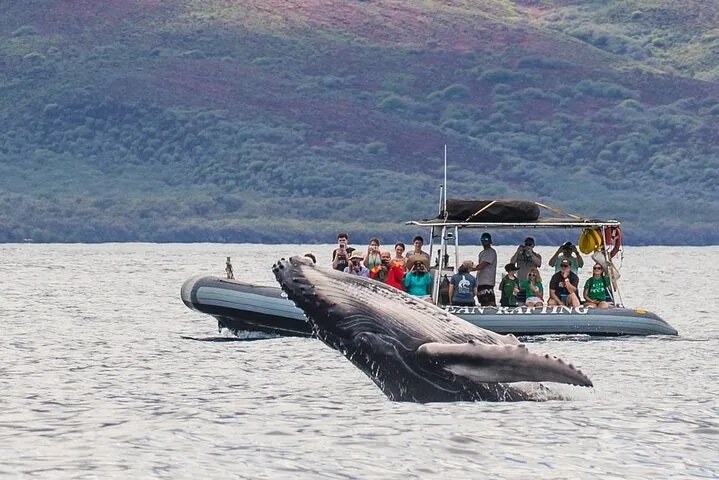
March is a good month to look for mothers with young calves. Humpbacks come to Hawaiʻi to mate, give birth and nurse, and they do not feed here; the calves born this winter are about 13 to 16 ft long at birth and grow through the season. NOAA describes mother and calf pairs resting quietly at the surface, and Pacific Whale Foundation’s Māʻalaea listing lists “mothers, calves or aggressive males competing for females” among the behaviors its naturalists explain.
Calves surface unexpectedly and are hard to see, which is why the State, the Sanctuary and Pacific Whale Foundation ask boats to slow to 6 knots or less within 400 yards of whales under the voluntary Go Slow, Whales Below campaign. The federal 100-yard approach rule applies to every boat, raft, kayak and swimmer. If a mother and calf swim toward a stopped boat, the captain stays in neutral and waits, but no tour can plan a close pass, so read any “up close” wording in a listing as a hope.
Other Experiences
Other experiences you might enjoy
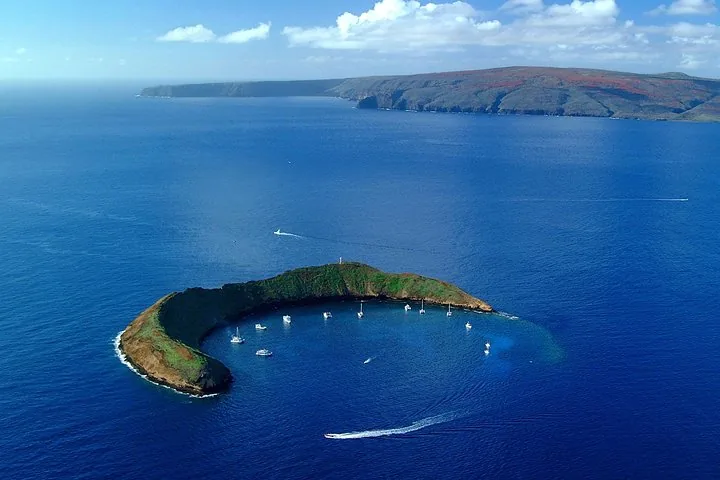
More March whale watches from Māʻalaea Harbor, Māla Boat Ramp near Lahaina, Kīhei Boat Ramp and Kāʻanapali Beach, from large catamarans to small rafts.
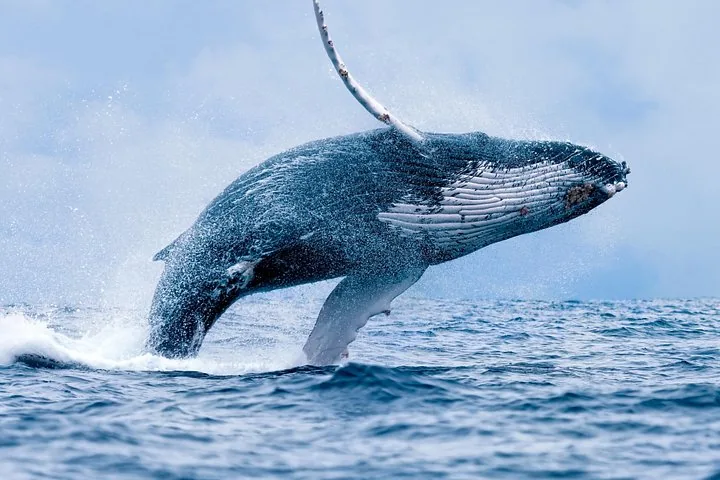
How fast the numbers fall in late March
The shore counts are one Saturday morning each, from fixed coastal sites, and NOAA notes that the totals may include duplicate sightings. They still show the shape of the season clearly.
| 2026 count date | Maui (Great Whale Count) | Statewide total |
|---|---|---|
| 31 January | 694 | 1,954 |
| 28 February | 847 | 1,935 |
| 28 March | 141 | 436 |
Most of that drop happens within March. Whales leave over several weeks, not on one date, so early March still sits close to the February picture and the last week is much thinner. The season does not end in March: the Sanctuary says whales are around roughly November to May, and NOAA’s sanctuaries office talks of the season ending in early May. If March is your only month, aim for the first two weeks; if you are here at the end of the month, a boat with a sighting guarantee is the safer booking.
The 2027 counts fall on Saturdays 30 January, 27 February and 27 March, 8:00 a.m. to 12:15 p.m. On Maui, Pacific Whale Foundation runs the count on the same mornings; check pacificwhale.org for registration. Our shore whale-watching guide covers the lookouts the volunteers use.
Which tours stop at the end of March
Season windows below are the dates each listing showed as bookable for the 2026–27 season when we checked in October 2026.
| Tour | Departs | Boat | From | Last bookable date |
|---|---|---|---|---|
| Redline Rafting guaranteed whale watch | Kīhei Boat Ramp | Raft, 1.5 hours | $100 | 31 March |
| Hawaii Nautical, up to 6 guests | Māʻalaea Harbor | 42-ft powerboat | $279 | 31 March |
| Pride of Maui whale watch and turtle snorkel | Māʻalaea Harbor | Large catamaran, 3.5 hours | $147 | 1 April |
| Pacific Whale Foundation | Māʻalaea Harbor | Whale watch, 2 hours | $100 | 15 April |
| Quicksilver | Māʻalaea Harbor | Power catamaran, 2 hours | $50 | 30 April |
| Kaulana, Hawaii Ocean Project | Lahaina Harbor | Multi-level boat, 2 hours | $70 | 15 May |
| Dive Maui small-group raft | Māla Boat Ramp | Raft, 2 hours | $81 | Year-round listing |
If you want Redline’s fast raft from South Maui or the Pride’s whale-and-snorkel combination, March is your last chance this season. Everything else carries on into April; our April guide follows those windows to the end.
Spring break trips and the featured raft
If your trip falls in a school spring break, book before you fly: the small boats carry the fewest people, so they have the fewest seats to go round on any one morning. The featured tour on this page, Dive Maui’s 2-hour small-group raft, departs from Māla Ramp in Lahaina, with check-in at the Dive Maui shop on Front Street near the Cannery Mall. It costs from $81 and holds a 4.9 rating from 735 reviews. A marine naturalist narrates, a hydrophone and speaker let you hear the whales, and the listing supplies reef-safe sunscreen and rain ponchos on rainy days.
Its guarantee matters most at the end of March: Dive Maui promises whale sightings from December to April, or your next trip is free, or your money back, your choice. It takes no children under 3 or pregnant guests and is not recommended for travelers with spinal injuries, so families with toddlers should look at a catamaran instead; our whale watching with kids page compares them. Read the full listing in our Dive Maui review.
Mornings are usually calmer on the leeward coast, with wind building after late morning, so an early departure is the comfortable choice on a raft. Our morning or afternoon guide explains why.
Frequently asked questions
Are there whales in Maui in March?
Yes. March is the last month of the usual January-to-March peak. The first half of the month generally still has plenty of whales, and numbers fall steeply in the last week: Maui’s shore count dropped to 141 on 28 March 2026.
Are whales still in Maui in March?
Yes, though fewer each week. Whales leave gradually and the season runs roughly to May, so some stay into April. For the best odds, book in early March; late in the month, choose a tour with a sighting guarantee.
Is March too late for whales on Maui?
Not early in the month. Late March is quieter: the 2026 statewide count fell from 1,935 in February to 436 on 28 March. Most of the whale watches we compare keep running into April.
Are there mother and calf sightings in March?
Often. Calves are born over the winter and stay with their mothers through the season, and NOAA describes mothers and calves resting at the surface. No tour can promise a pair, and every boat must stay at least 100 yards away.
Can you see whales in Hawaii in March?
Yes. Hawaiʻi’s whale season runs roughly November to May, with the peak from January to March. Maui logs the highest island shore counts, and the 2027 counts fall on 27 March among other dates.
Ready to book?
Compare every March departure in our ranked Maui whale-watching tours, check whether a sighting guarantee fits your dates, or check availability on the homepage.
Two Hours with the Humpbacks off Māʻalaea
Certified marine naturalists explain what the whales are doing, a hydrophone lets you hear them sing, and if no whales are seen you go again free. Season: 1 November to 15 April.
Check Availability & Book