What to Wear Whale Watching on Maui
What to wear and bring on a Maui whale watching cruise: layers for wind and spray, shoes for beach boarding, mineral sunscreen and camera protection.
Wear quick-dry shorts or light pants over a swimsuit, a T-shirt, and a light windbreaker you can take off once the sun is up, with a hat that ties on, sunglasses on a strap and shoes you can get wet or slip off. Winter mornings on Maui are mild, with average lows of about 64 to 67°F at Kahului from December to April, but wind and spray on the water feel cooler, especially on an open raft. Carry mineral sunscreen, a waterproof pouch for your phone and binoculars if you have them, then check which kind of boat you booked on our Maui whale-watching cruise comparison, because a raft and a shaded catamaran call for different clothes.
Check Availability
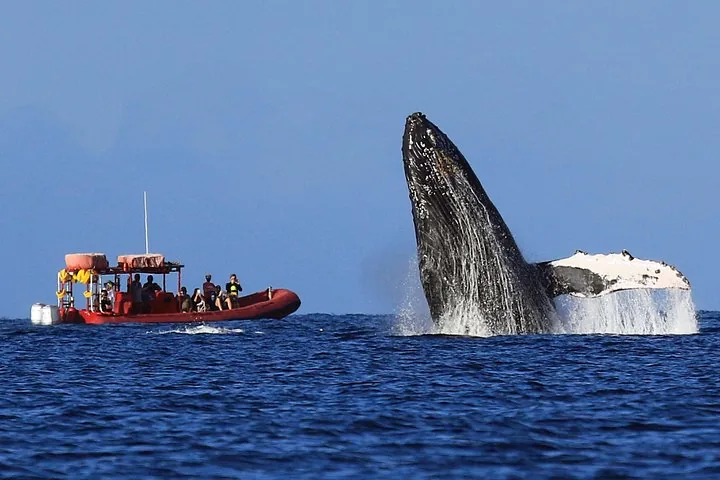
Kihei, Maui: Guaranteed Whale-Watching Tour by Raft
- 4.9/5 (696 reviews)
- About 1.5 hours
- Free cancellation
- Operated by Redline Rafting
Includes Whale watch on a large raft limited to 20 guests · Commentary from an onboard marine naturalist · Hydrophone to listen …
You'll choose your date and complete the booking on Viator. Free cancellation up to 24 hours before departure.
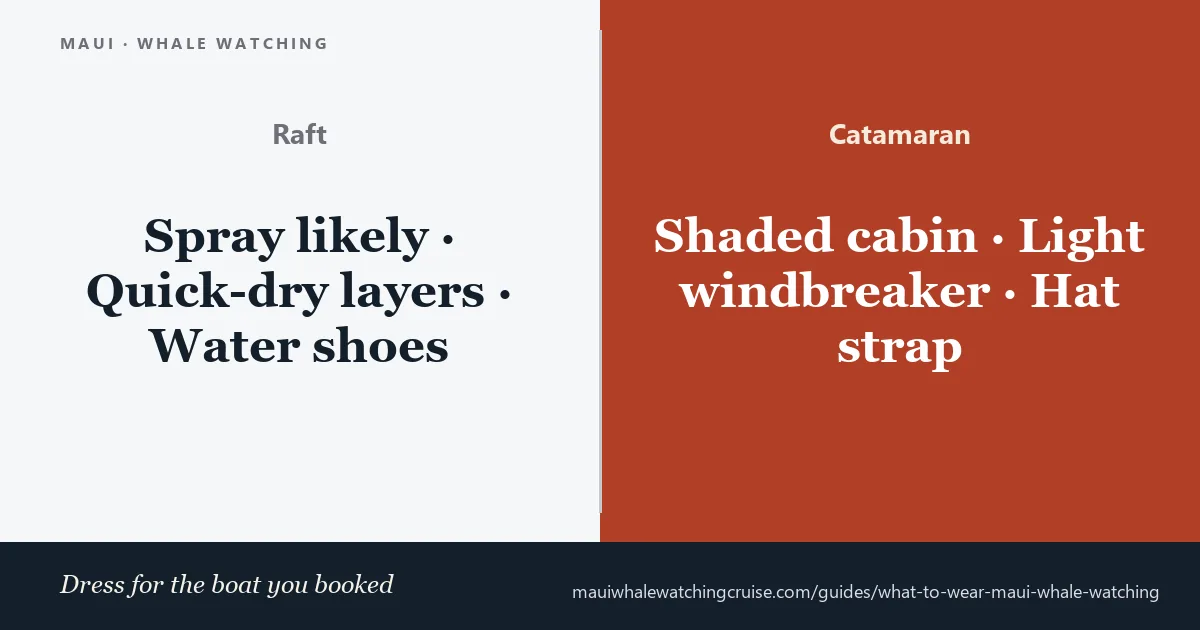
Layers for wind, spray and early starts
Most whale watches last about two hours, and many leave early: Redline Rafting, the featured tour here, runs at 7, 9 and 11 a.m. from Kīhei Boat Ramp. NOAA’s 1991–2020 normals for Kahului Airport give winter lows between 63.6°F (January) and 66.6°F (April) and highs in the low to mid 80s. Out on the water, add wind. Trade winds usually build through the day on the leeward coast, and Māʻalaea Bay is known for strong afternoon wind.
That points to a thin layer over a T-shirt. Malolo’s afternoon whale watch lists a windbreaker under what to bring, and the Kaulana from Lahaina Harbor asks guests to “dress for breezy on the water conditions” and to secure hats. One reviewer of the Pacific Whale Foundation sunset dinner cruise advises a small jacket or cover-up, because it was chilly by the end. Leave the heavy coat at home; you will want to shed layers as the morning warms.
Raft or catamaran: dress for the boat
On a raft, plan to get wet. Hawaii Ocean Rafting’s listing says it outright (“Plan to get wet! This is a low to water boat”), warns of ocean spray and light rain, and says available shade varies, so bring a hat, sunglasses and reef-safe sunscreen. Its GetYourGuide listing adds a towel, water shoes and waterproof bags for personal items. The same applies to Redline’s 1.5-hour Kīhei raft, which describes itself as a large, sturdy raft built for a speedy ride; wear quick-dry clothes, and skip cotton jeans. Redline takes ages 8 to 65 and no pregnant guests or anyone with back or neck injuries.
On a larger catamaran you can stay much drier. Quicksilver advertises a shady cabin, the Kaulana a shaded main cabin with window viewing, and Makai Adventures “lots of shade”. You may still catch spray at the rail, and both Quicksilver and Malolo say they operate in most weather and ask you to dress for it.
Other Experiences
Other experiences you might enjoy
More whale watches to dress for, from open rafts out of Kīhei Boat Ramp and Māla Boat Ramp to shaded catamarans from Māʻalaea Harbor and Kāʻanapali Beach.
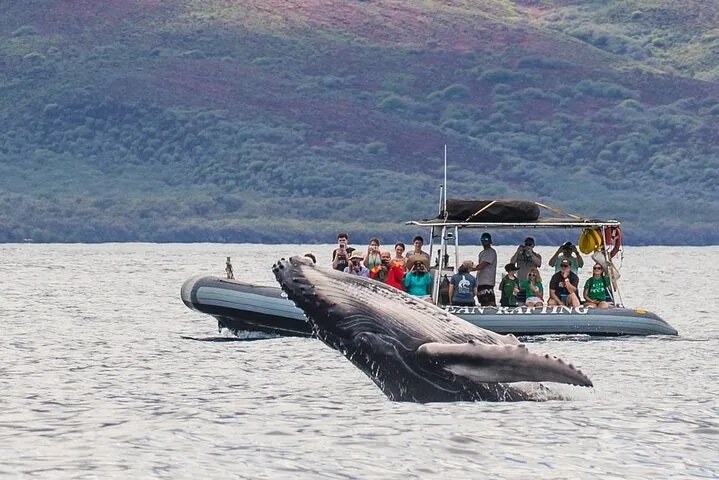
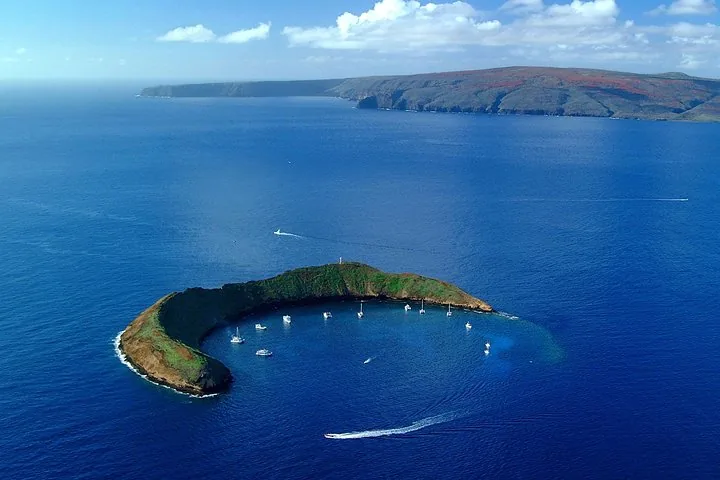
Shoes: beach boarding, piers and no-shoes boats
Shoes depend on where you board. At Kāʻanapali there is no harbor: catamarans pull up to the sand and you wade out, sometimes knee-deep, so wear a swimsuit or shorts and sandals you can carry. Shoes come off and are collected on the beach. Sea Maui’s whale watch boards this way, Teralani’s sunset sail says you will wade in and take off your shoes, and Sea Maui’s sunset cruise calls itself a barefoot sail and asks guests to leave white tennis shoes and stilettos at home.
Some boats are shoe-free even at a dock. Maui Ocean Adventures describes its Epic Small Group Whale Watch as “a no shoes cruise” and recommends easy-to-remove footwear. At Māʻalaea, Alii Nui guests walk down a pier and step across a gap onto the deck, so wear something with grip. On a raft, water shoes or sport sandals with a heel strap stay on when you climb aboard; flip-flops come off easily.
Sun protection and Hawaiʻi’s sunscreen rules
The sun is strong on open water even in January, so pack a brimmed hat with a strap, sunglasses and a long-sleeved sun shirt for rafts with little shade.
Hawaiʻi’s Act 104 of 2018, in force since 1 January 2021, bans the sale of sunscreens containing oxybenzone or octinoxate without a prescription. Maui County went further: since 1 October 2022 only mineral sunscreens, made with zinc oxide or titanium dioxide, may be sold here. “Reef safe” on a label is not a regulated term, so read the active ingredients. Hawaii Ocean Rafting allows only rub-on reef-safe sunscreen and no sprays on board, which is a good rule anywhere on a boat deck.
Cameras, phones and binoculars
Keep your phone in a waterproof pouch with a lanyard on any raft or beach-boarding trip, and carry a small dry bag for wallets and car keys. A camera strap matters more than a big lens: whales surface suddenly, and nobody wants to juggle gear at the rail. The Sanctuary recommends binoculars, spotting scopes and zoom lenses for watching whales without approaching them, and that is the reason to bring them: every boat stays at least 100 yards from a whale. Leave the drone at your hotel; drones also have to keep 100 yards away.
What the boats provide
Read your own listing before you pack. A few operators supply part of the kit.
| Tour | Boat | What the listing provides | What to bring or expect |
|---|---|---|---|
| Redline Rafting | Raft, Kīhei | Marine naturalist, hydrophone | Quick-dry clothes, hat with strap, sunscreen |
| Dive Maui | Raft, Māla Boat Ramp | Reef-safe sunscreen, rain ponchos on rainy days, filtered water | Clothes that can get damp |
| Hawaii Ocean Rafting | Raft, Lahaina | Snacks, life jackets for emergencies | Plan to get wet; rub-on sunscreen only; BYOB in plastic or cans |
| Hawaii Nautical | 42-ft powerboat, Māʻalaea | Binoculars, snacks, restrooms | A light layer |
| Quicksilver | Power catamaran, Māʻalaea | Shady cabin, two restrooms, sodas and juice | Dress for the weather; cash for tips |
| Kaulana | Multi-level boat, Lahaina Harbor | Shaded cabin, marine bathroom, hydrophone | Breezy-weather layer, secured hat, ID |
| Sea Maui | Beach-loading boat, Kāʻanapali | Open bar, snacks, parking validation | Swimsuit or shorts for beach boarding |
Several Pacific Whale Foundation and Teralani listings on GetYourGuide rent binoculars before boarding, and the Pacific Whale Foundation ones also sell reef-safe sunscreen on board. Guests who want a drink from an open bar need photo ID showing they are 21 or older.
Frequently asked questions
What do you wear on a whale watching tour?
Light layers: a T-shirt, quick-dry shorts or pants over a swimsuit, and a thin windbreaker. Add a hat with a strap, sunglasses and mineral sunscreen. Wear shoes you can get wet or take off, and keep your phone in a waterproof pouch.
Should I bring a jacket on a Maui whale watch?
Bring a light windbreaker, not a heavy coat. Winter lows at Kahului average about 64 to 67°F, and wind on the water makes it feel cooler, especially early in the morning, late in the afternoon and on rafts.
Is it cold on a Maui whale watching boat?
Rarely cold, but often cooler than on land. Highs are in the low to mid 80s from December to April, so a light layer for the ride out is usually enough. Spray on a raft makes it feel colder than it is.
Can I wear flip flops on a whale watching boat?
On a catamaran, usually yes, and at Kāʻanapali shoes come off before boarding anyway. On a raft or a pier boarding, choose sandals with a heel strap or water shoes, which stay on when you step aboard.
Is reef-safe sunscreen needed on a whale watch?
On Maui only mineral sunscreens may be sold, and some boats, such as Hawaii Ocean Rafting, allow only rub-on reef-safe sunscreen. Look for zinc oxide or titanium dioxide on the label, since “reef safe” is not a regulated term.
What should I wear on a raft versus a catamaran?
On a raft, quick-dry clothes, water shoes and a waterproof bag, because spray is likely and shade is limited. On a large catamaran, normal summer clothes plus a light layer, since most have a shaded cabin.
Ready to book?
Once you know what to pack, read our Redline Rafting review, compare the raft tours and catamarans, or check dates on the homepage.
Two Hours with the Humpbacks off Māʻalaea
Certified marine naturalists explain what the whales are doing, a hydrophone lets you hear them sing, and if no whales are seen you go again free. Season: 1 November to 15 April.
Check Availability & Book